


Escalating Middle East Tensions – A Rising “Wave” of Global Logistics Costs
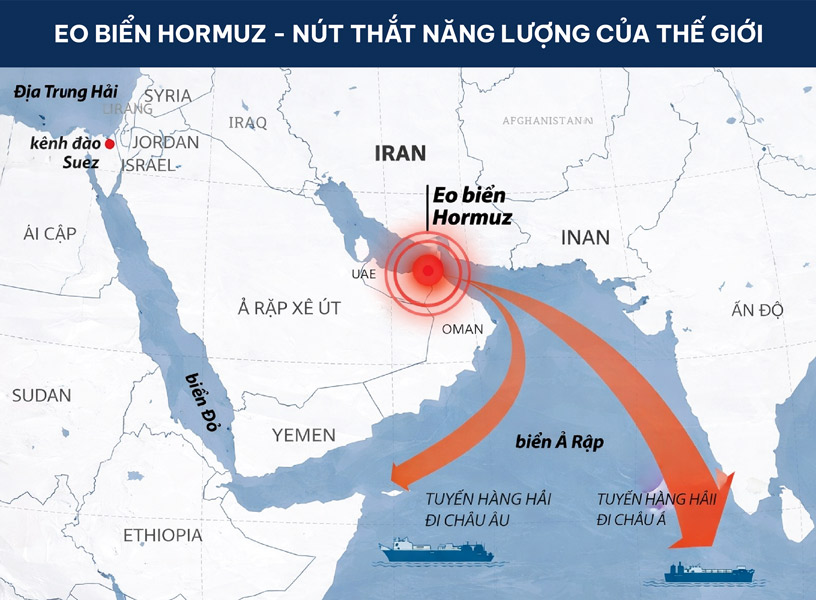
(The Strait of Hormuz – a strategic maritime route connecting the Persian Gulf with markets in Asia and Europe, playing a vital role in the global energy and trade supply chain)
Tensions in the Middle East continue to escalate following recent airstrikes involving the United States, Israel and Iran, raising maritime security risks in the Persian Gulf region. Several commercial vessels have reportedly been attacked while transiting the Strait of Hormuz – a critical shipping route connecting Middle Eastern oil-producing countries with global energy markets.
The latest military developments are raising concerns about potential disruptions to key maritime trade routes, while also placing pressure on fuel prices, freight surcharges and global logistics supply chains.
Three Global Maritime “Chokepoints” Under Pressure
Political instability in the Middle East may increase risks for three shipping routes that play a crucial role in the global trade system.
1. Strait of Hormuz – The world’s energy chokepoint
Located between Iran and Oman, the Strait of Hormuz is the most important oil transit route in the world, with around 20% of the global oil supply transported through this area every day. In addition, most liquefied natural gas (LNG) exports from Gulf countries – particularly Qatar – must pass through this route to reach markets in Asia and Europe.
Amid rising military tensions, any disruption at Hormuz could directly impact global energy markets, triggering significant fluctuations in fuel prices and ocean freight costs.
2. Bab el-Mandeb Strait – Gateway of the Asia–Europe shipping route
The Bab el-Mandeb Strait lies between Yemen and Djibouti, connecting the Red Sea with the Gulf of Aden and the Indian Ocean. It is a vital corridor for trade between Asia and Europe, with approximately 17,000 commercial vessels transiting the route each year.
Instability in the Red Sea region in recent months has prompted many shipping lines to reassess the level of risk when sailing through the area, leading to higher operational and marine insurance costs.
3. Suez Canal – A strategic container shipping route
The Suez Canal plays a key role in connecting manufacturing hubs in Asia with consumer markets in Europe. Each year, around 12–15% of global trade and nearly 30% of international container traffic pass through this maritime route.
When shipping lanes across the Red Sea and the Middle East face security pressures, traffic through the Suez Canal may also be affected, potentially causing disruptions across global supply chains.
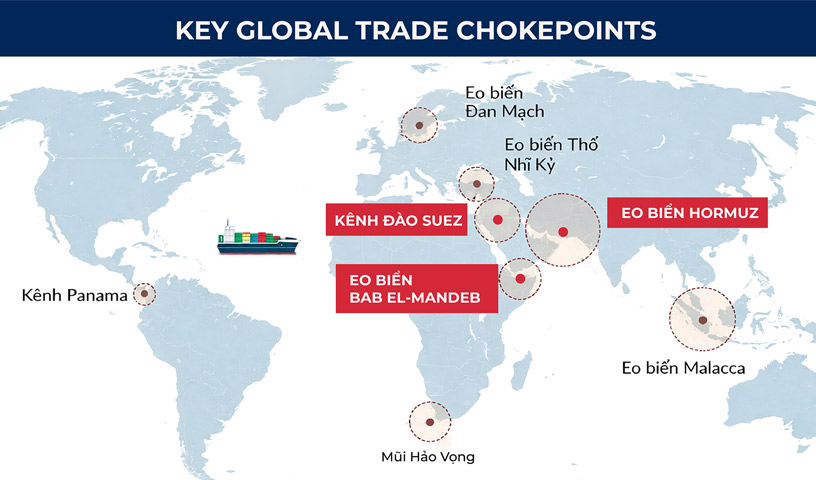
(Strategic maritime routes such as the Strait of Hormuz, the Bab el-Mandeb Strait and the Suez Canal play a crucial role in the global trade system.)
Impact on the Global Logistics Market
Rising tensions along these strategic maritime routes are creating a ripple effect across the global logistics market. Concerns about potential disruptions to oil supply have pushed energy prices upward, which in turn drives up transportation fuel costs.
To offset operational costs and security risks, many international shipping lines have begun applying additional surcharges on routes related to the Middle East and the Red Sea, including:
• War Risk Surcharge (WRS) – surcharge applied to cover war-related risks
• Emergency Fuel Surcharge (EFS) – additional fuel surcharge applied during periods of fuel price volatility
In some cases, shipping lines have adjusted their routes by diverting vessels around the Cape of Good Hope instead of transiting the Suez Canal. This change in routing may extend transit times by 10–15 days, while significantly increasing fuel consumption, operating costs and the risk of delivery delays.
Adjustments in the Middle East Transport Network
In response to geopolitical volatility, several international carriers such as CMA CGM have reopened import bookings to the Middle East region, including markets such as Iraq, Kuwait, Qatar, Bahrain, Saudi Arabia and the UAE.
At the same time, shipping lines are also deploying multimodal logistics solutions to maintain cargo flows across the region.
These solutions combine ocean freight, feeder services and land transport (land bridge) through strategic transshipment ports such as: Jeddah, Khor Fakkan, Fujairah, Sohar.
From these ports, cargo will be transported via land bridge to Khalifa / Jebel Ali / Sharjah, and then continue by feeder vessels or road transport to markets across the Gulf region.
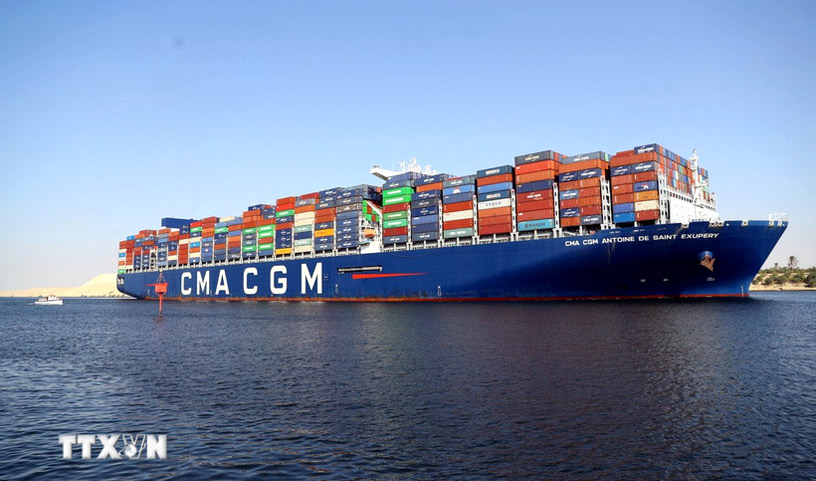
(Shipping lines are strengthening multimodal logistics solutions to maintain trade flows into the Middle East region - Source image: TTXVN)
The sea – land bridge – feeder model helps maintain regional logistics connectivity while also providing businesses with more flexible transportation options when certain direct shipping routes face disruptions.
Recommended Solutions from Headway Logistics
In a volatile global freight market, Headway Logistics recommends that import-export businesses proactively build flexible logistics strategies to minimize cost risks and ensure delivery timelines.
Plan shipments and booking early:
Proactively arranging shipment schedules and securing bookings in advance helps businesses ensure vessel space while reducing the risk of freight rate increases and additional surcharges during periods of market volatility.
Remain flexible in route and transshipment port selection:
Companies may consider alternative shipping routes or utilize regional transshipment ports in the Middle East to maintain cargo flows when certain direct routes are disrupted.
Adopt multimodal logistics solutions:
When delivery timelines are critical, businesses may consider multimodal logistics solutions that combine ocean freight, feeder services and land transportation to shorten transit times and enhance supply chain flexibility.
Headway – Supporting Customers Through Market Volatility
In the context of rising geopolitical risks, building flexible and diversified supply chains has become a key factor in maintaining stable import-export operations.
With extensive experience in international logistics and a global partner network, Headway stands ready to support customers in developing suitable logistics solutions to ensure supply chains continue to operate efficiently amid market volatility.
Contact Headway today to receive the latest updates on freight rates and developments in the Middle East routes.
Other news

HEADWAY - HOCHIMINH OFFICE (HO)
-
 44 Nguyen Van Kinh Street, Quarter 14, Cat Lai Ward, Ho Chi Minh City, Vietnam
 -
 (+84) 28 22 00 55 66/ (+84) 28 22 00 77 66
HEADWAY - HA NOI OFFICE
-
03rd Floor, Lotus Building, No. 02 Duy Tan Street, Cau Giay District, Ha Noi City, Vietnam
-
(+84) 24 3227 2123
HEADWAY - HAI PHONG OFFICE
-
06th Floor, Hoang Phat Building, No 4 Lot 2A Le Hong Phong Street, Ngo Quyen Ward, Hai Phong City, Vietnam
-
(+84) 225 730 0269
HEADWAY - DA NANG OFFICE
-
No. 1 Le Dinh Ly Street, Thanh Khe Ward , Da Nang City, Vietnam
-
(+84) 236 730 1068
HEADWAY - CHU LAI OFFICE
-
Nui Thanh Commune, Da Nang City, Vietnam
-
(+84) 235 650 6902
HEADWAY - DONG NAI OFFICE
-
670 Tay Lac Street, An Chu Hamlet, Binh Minh Commune, Dong Nai Province, Vietnam
-
(+84) 28 22 00 55 66
HEADWAY - QUY NHON OFFICE
-
01st floor, Viettel Gia Lai Building, No.1 Dinh Bo Linh Street, Quy Nhon Ward, Gia Lai Province, Viet Nam
-
(+84) 256 2478 188
HEADWAY - THANH HOA OFFICE
-
05th Floor, Petroleum Building, No.38A Le Loi Avenue, Hac Thanh Ward, Thanh Hoa City, Vietnam
-
(+84) 28 22 00 55 66